The Walls of Alhambra Speak: Secrets They Whisper to You

Hey adventurers! Welcome back to my channel, where we chase history's whispers around the globe. Today, I'm beyond thrilled to be standing right here in Granada, Spain, gazing up at the majestic Alhambra as the sun dips low, painting the red walls in golden hues. If you've ever dreamed of stepping into a fairy tale woven from stone, water, and ancient secrets, buckle up—this is the place where the past doesn't just speak; it echoes through every arch and inscription. Join me as we uncover what these walls are saying to us visitors, drawing from the real history, archaeology, and those poetic vibes that make the Alhambra a timeless inspiration.
Picture this: I'm hiking up the Sabika hill, the same path trodden by sultans and conquerors for centuries. The Alhambra isn't just a pretty palace—it's a fortress complex that started as a humble citadel back in the 9th century under the Zirid dynasty, built on even older Roman and Visigothic ruins unearthed by archaeologists. Fast forward to 1238, when Muhammad I, the founder of the Nasrid dynasty—the last Muslim rulers in Spain—kicked off its transformation into a self-contained royal city. We're talking workshops, mosques, baths, and an ingenious water system channeling snowmelt from the Sierra Nevada mountains through aqueducts. It's like the ultimate survival palace, blending defense with luxury during the turbulent times of al-Andalus, when Muslim kingdoms held out against the Christian Reconquista.
As I enter the Alcazaba, the oldest part and the military heart, I feel the weight of history. Archaeological digs here have revealed layers of fortifications from the 800s onward, including towers dynamited by Napoleon's troops in 1812 and later restored. But oh man, the real magic hits in the Nasrid Palaces, expanded in the 14th century under sultans Yusuf I and Muhammad V. These guys were visionaries—Yusuf added grand gates and towers, while Muhammad V crafted spaces like the Hall of Ambassadors, where decisions that shaped empires were made. And after the 1492 surrender to Ferdinand and Isabella, it became a symbol of cultural fusion, with Renaissance additions like Charles V's palace sitting alongside the Islamic gems. No wonder it's a UNESCO World Heritage site since 1984—it's a living timeline of resilience and reinvention.

Now, let's talk about those echoing walls that inspired this vlog. As I trace my fingers along the intricate stucco and tilework—think geometric zellij mosaics and arabesque patterns that once shimmered in bright colors and gold—these surfaces aren't silent. Archaeologists have cataloged nearly 10,000 Arabic inscriptions across the complex, in flowing Naskhi and angular Kufic scripts. They're everywhere: on arches, fountains, ceilings, even hidden in cellars and under stairs. What do they echo? A chorus of faith, poetry, and power that transports you back to the Nasrid era.
First off, the religious echoes: Verses from the Quran praising prayer and devotion, like one extolling those who remember God at all times, or a concise three-verse chapter that's a cornerstone of Islamic wisdom. These weren't just decor—they infused daily life with spiritual beauty, reminding rulers and residents of divine guidance amid political storms.
Then, the poetic whispers: Court poets like Ibn Zamrak crafted verses that still resonate. In the Court of the Lions, a poem describes the fountain's water as "tears of a lover" and the marble lions as guardians roaring in praise of the sultan. It's metaphorical gold—symbolizing the emir's authority and invoking blessings for his lineage. And running through it all is the Nasrid motto, repeated endlessly: "Wa la ghalib illa Allah"—"There is no victor but God." It's a humble flex, echoing the dynasty's claim to legitimacy as protectors of faith against invaders.
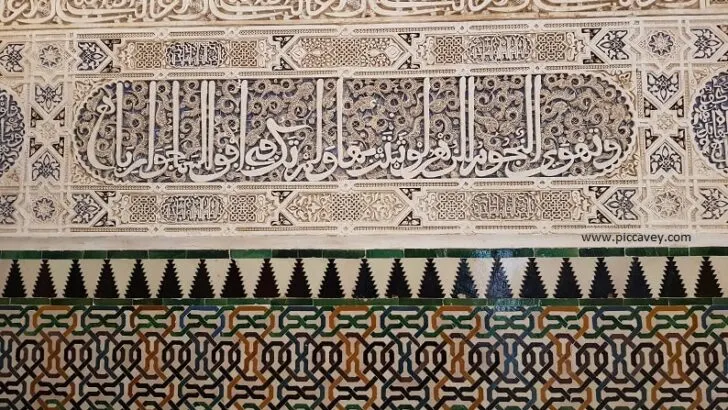
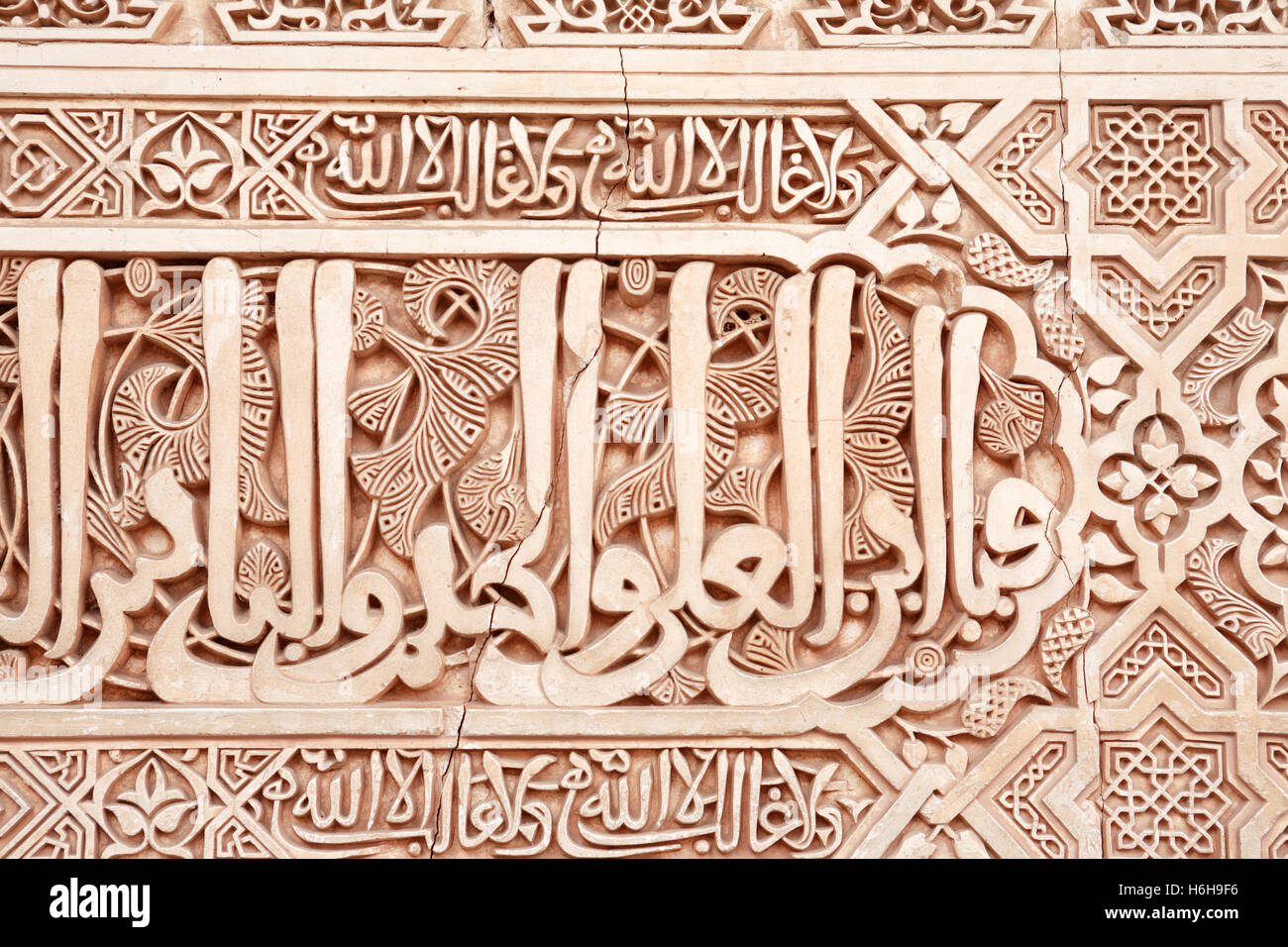
But these echoes aren't just pretty words—historians see hidden messages in them, like subtle propaganda boosting the sultans' God-given rule. Imagine standing in the Hall of Kings, where painted ceilings depict legends, and the walls murmur praises like "Glory to our lord the Sultan Abu l-Hajjaj, whom God help." It's inspiring how these inscriptions turned a fortress into a canvas of aspiration, blending art, politics, and spirituality.
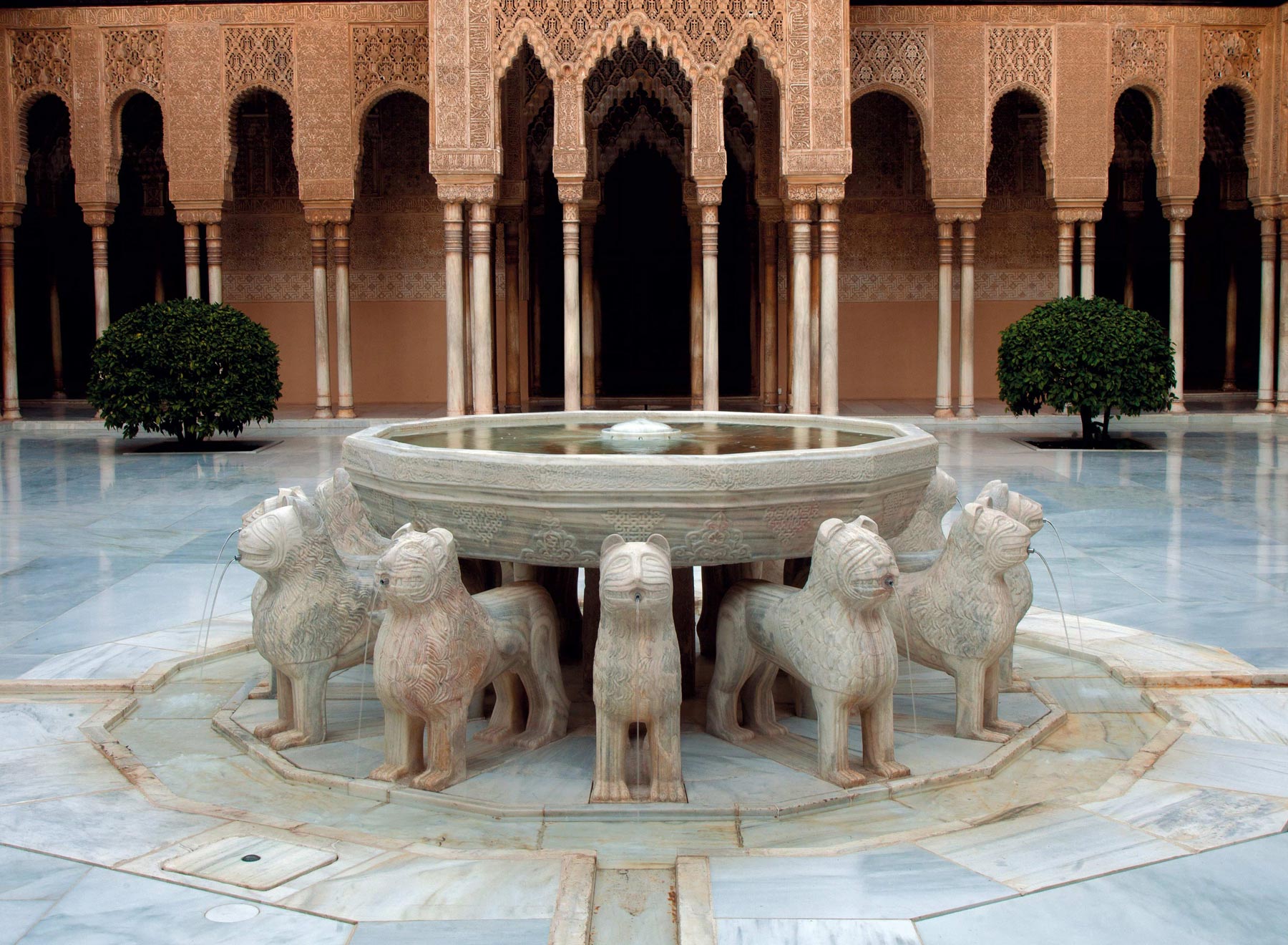
Wandering into the Court of the Lions—guys, this courtyard is iconic! The central fountain, supported by 12 marble lions (restored after centuries of wear), gurgles with water that once symbolized paradise. Archaeology shows it was part of Muhammad V's masterpiece, with halls around it featuring muqarnas vaults that look like dripping honeycombs. The echoes here? Stories of courtly life, love songs, and reflections on beauty and homeland, as if the walls are urging us to appreciate the fleeting splendor of existence.
And don't get me started on the Generalife gardens, the sultans' summer retreat just uphill. These terraced orchards and fountains, with their reflective pools and cypress hedges, echo the Islamic ideal of an earthly Eden. Excavations reveal sophisticated irrigation from the 13th century, turning arid land into a lush haven. As I stroll here, the walls (and hedges) seem to whisper of renewal—after neglect and earthquakes, 19th-century restorers like Leopoldo Torres Balbás brought it back, inspired by tales from visitors like Washington Irving, whose 1832 book Tales of the Alhambra romanticized the place for the world.

Wrapping this up, the Alhambra's walls echo a powerful message to us modern wanderers: In a world of change, beauty and heritage endure. From the Nasrid sultans' defiant motto to the fusion of cultures post-1492, it's a reminder to build legacies that inspire across time. If this vlog fires you up to visit, hit that like button, subscribe for more epic explorations, and drop in the comments: What historical echo calls to you? Until next time, keep chasing those whispers—peace out from Granada!


Comments
Post a Comment